Engineered for Efficiency: Website Design for Auto Spare Parts Manufacturers
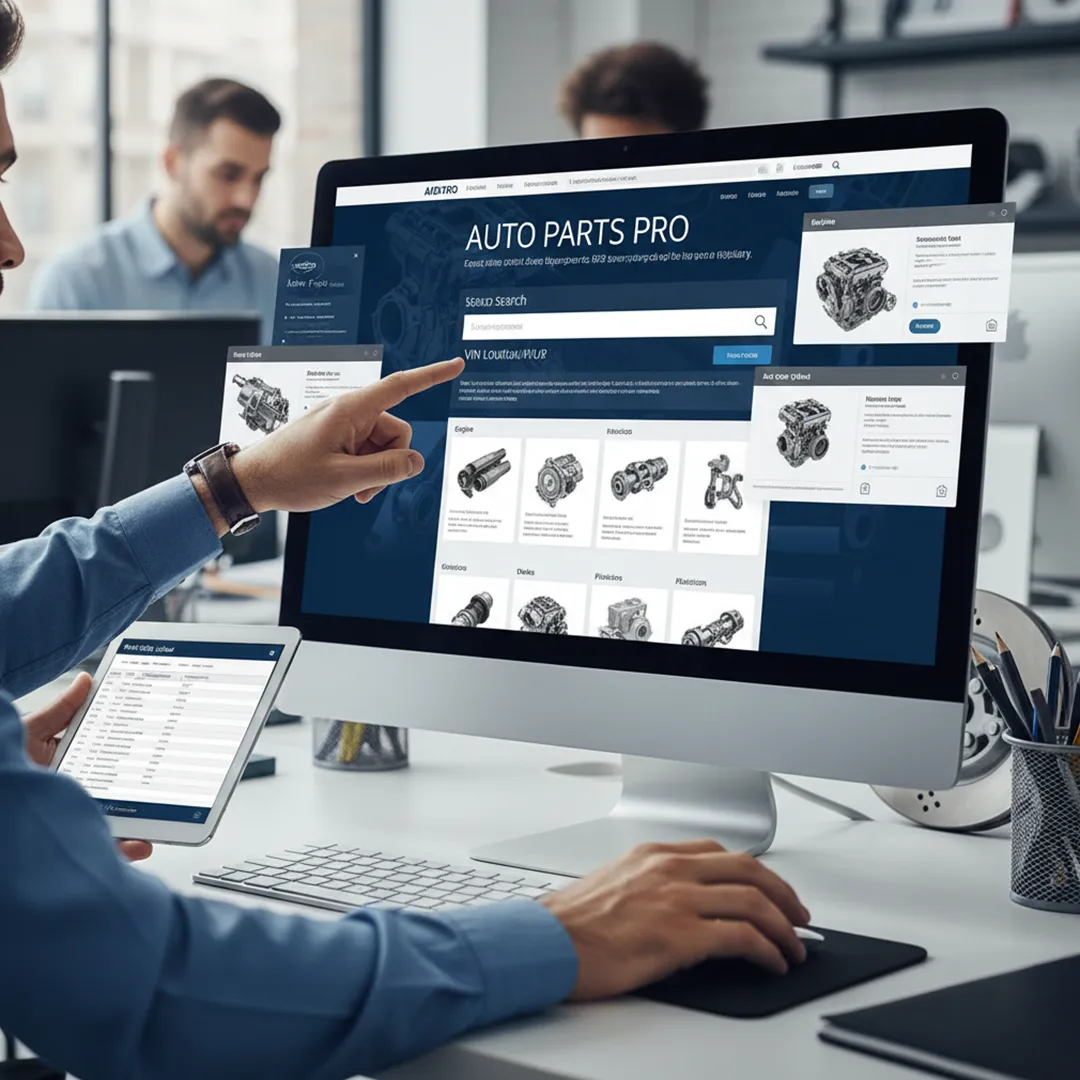
For an automobile spare parts manufacturing company, the website is less a glossy showroom and more a mission-critical B2B digital portal. Its primary function is not to sell individual items to consumers, but to facilitate high-volume, accurate orders and efficient information exchange with distributors, mechanics and other manufacturers (Tier 1/Tier 2 suppliers). The design must prioritize speed, accuracy and self-service efficiency.
Here are the critical design elements and features for a spare parts manufacturer's website:
1. The Core: The Search and Catalog Experience
Since the user knows exactly what they need, finding the part must be instantaneous and infallible.
- Robust Search Functionality: This is the most crucial element. The search bar must be highly prominent and support multiple types of queries:
- Part Number Lookup: The ability to instantly search by the manufacturer's internal SKU, OEM part number, or competitor cross-reference number.
- Vehicle-Fitment Search (Y/M/M): A cascading drop-down or intelligent text field that allows the user to select Year, Make and Model to narrow down compatible parts.
- VIN Integration: Ideally, allowing B2B partners to enter a Vehicle Identification Number (VIN) to pull up the exact, compatible components, drastically reducing misorders and returns.
- Hierarchical and Filtered Catalog: The product catalog must be logically structured by category (e.g., Engine - Filtration - Oil Filters) with faceted filters for brand, material and critical specifications.
2. Information and Technical Specifications
The B2B customer relies on detailed technical data to make purchasing decisions.
- Rich Product Pages: Every part must have a dedicated page featuring:
- Multiple, High-Resolution Imagery: Show the part from several angles. Use 3D renderings or exploded-view diagrams for complex assemblies.
- Detailed Specs: Display all necessary technical information prominently (e.g., dimensions, material composition, torque specifications, industry certifications).
- Installation/Tech Resources: Provide downloadable PDFs for installation guides, safety sheets and warranties. This positions the manufacturer as a trusted expert.
3. Credibility and Trust
Since quality and reliability are paramount, the design must immediately convey professionalism and trust.
- Professional, Clean Aesthetic: The design should use a clean layout, clear typography and a brand color palette that evokes engineering, precision and strength (often featuring blues, grays and metallic accents). Avoid unnecessary animations or clutter that slow down loading speed.
- Showcase Quality Control: Feature certifications (e.g., ISO, TS), quality testing processes and production capabilities with high-quality videos and facility tour images.
- Case Studies and Testimonials: Dedicate sections to success stories, highlighting major partners or challenging projects completed to build B2B social proof.
In summary, an effective website for an auto spare parts manufacturer is a powerful tool built on clarity, performance and transactional accuracy. It must function as a reliable, 24/7 extension of the sales and logistics departments.